
20min read
A conversation with Ken McCracken
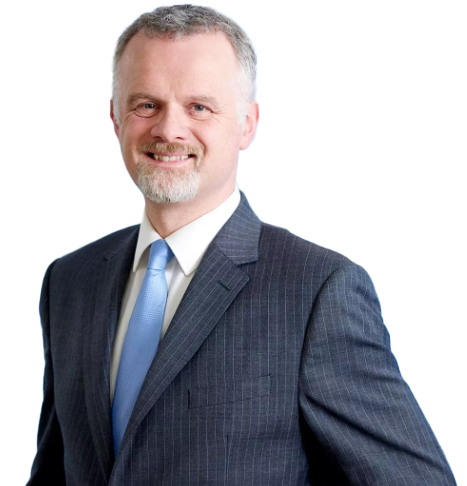
Ken McCracken, Family Business Consultant
An adviser rocks-up to a family and says: “You ought to do this and you ought to do that. I’m the expert.” The family, rather than throwing out the adviser, asks: “Why? We’ve never done that in the past, and we’ve been in business successfully for 100 years.”
The adviser responds: “Because, it’s best practice.” “Says, who?” counters the family. Ken McCracken says advisers should start with a bit more humility and make understanding the reasons for a family business’s existing success, the beginning of the conversation.
A family business consultant of some twenty years’ standing, Ken McCracken works with a wide range of families. He has practiced as a corporate lawyer and managing partner of a law firm; set up an international family business consultancy, which gave him the opportunity to work in Europe, Asia and North America as well as the Middle East; and developed a new consulting practice at a Big 4 accounting firm. He’s also a teacher and writer about family business governance.
What is family governance?
“I define family governance as everything – so, that’s formal practices, informal customs and conventions – that maintains a functional balance of interests – and I mean functional, not perfect – between the owners as a group, the enterprise as an entity and the wider family whose lives are effected by that enterprise and who are often related to the owners, and enables them to achieve whatever purpose they’re striving to achieve through this enterprise, and stops others from undermining it, which is an important part of governance!” explains Ken. “That’s a broader definition than others tend to use, but I think it’s far more pragmatic,” he adds.
According to Ken, the question as to whether a family should have governance or not is moot. “All families have governance,” he says. “If you’re successful then you are governed effectively. You cannot be successful without effective governance. Now, it might not be conventional, it might not be formal or structured and all that good stuff, but you will have governance. So it’s only a question of figuring out what’s there, what you want to keep and what you want to improve,” he states.
Governance by design, or evolution?
“A lot of family business, family enterprise, or family office governance evolves,” says Ken. “It’s the consequence of innumerable interactions among participants, of various decisions that they’ve taken along the way. The decisions that go well they tend to stick with and repeat in the future, and they learn from the mistakes. You build up a lot of practices by experience – it’s not the consequence of conscious human design or intervention, it’s just life!” he comments. “It’s extraordinarily powerful and important, and sadly, in my view, largely overlooked.
“We narrow governance down to things that we can introduce that families haven’t done before such as, ‘you ought to have this kind of person on your Board’, or ‘you ought to have a Charter’,” Ken continues. “I deviate from that conventional view because I cannot understand why a family would start to do something that it hasn’t done in the past, if what it has done in the past worked!” he exclaims. “Families just need to understand how they have done things in the past, and then they can decide what, if anything, might need to be changed.”

Ken says that he stands slightly apart from the herd in this view: “The mentality that has emerged is that there are a set of universal best practices that can be applied to every family business and against which every family enterprise should measure itself,” he explains. “Personally, I think that’s ludicrous! If a family is successful already by not doing these things, why would it want to start doing things that would be untested innovations, in preference to simply continuing to do the things that have made them successful in the first place?” he asks. “Who are we to denigrate and criticise what a family has done by saying it’s not a ‘best practice’? Who decides what’s best? I think that a family should decide what’s best and they should get on with it!” he responds.
Working out what works
According to Ken, it’s a process of discovery that you have to approach very sensitively and comprehensively to get a big picture view of ‘how we do things around here’. He says: “You can do it by looking at specific areas, for example: How are dividends paid? How are decisions made? Is information shared with family members as well as owners? How do family members get a job in this enterprise? I’m pretty sure that in a lot of cases you’ll get an answer if you just go and ask. There’s as much information as your curiosity can generate,” he says.
“But there’s another technique that I use that actually exposes governance and creates a big picture view of governance that families can then say: ‘Yes, that’s us’, or ‘That’s us more or less and here are the things that we do that you haven’t quite picked up on’. That, for me, is the absolute starting point for any discussion about governance,” he explains.
It’s summed-up in the well-known phrase: “First seek to understand”, says Ken. “Families who are in multi-generational enterprises especially, know they have a certain way of doing things. They may like, or dislike it – which is probably emotional as well as rational, but they might not be very good at describing it. So, when you create that governance picture, they can say: ‘Yes, that’s how we do things around here, and here’s the bit that I don’t like’.
That could be, for example: we’ve always had a method of choosing leaders which has had an innate gender bias in favour of males and we just don’t feel comfortable with that anymore, and we want to change that. Therein lies the work of change,” Ken says. “Everything else can be left in peace.”
Cultural fit
Ken believes the reason we talk about codification such as, written constitutions etc., is because of a cultural bias from other parts of the world. “A lot of the ideas that we are developing came culturally from the United States that has a written constitution, or from Europe where civil codes and codifications is part of their history. That’s not the case in the United Kingdom and that’s not the case in countries like New Zealand,” he explains.
“Our reality is that over time, practices and customs and conventions develop, they are respected and they still hold sway. We don’t want to capture all that and freeze it in a written constitution, which tends to then lead to any number of amendments as you have in the USA. We’re much more comfortable with letting things breathe, live and change, or simply run out of road and become irrelevant so we can drop it. We don’t need to change the constitution if something no longer makes sense, we just stop doing it,” he says. “We need to step back from these ideas sometimes and reflect on why they have gained currency, move them along and expand them by looking at other cultural ideas,” Ken suggests.

Signs of success
Ken holds a fundamental philosophical difference of opinion to the mainstream ‘best practice’ view of how to measure success. “People start with a version of things against which to measure a family, say: shareholder value, productivity, family harmony, or whatever else, and that’s the measure of success. I don’t know if that matters to a particular family unless I ask them,” he points out. “I think its personal to the family.
“My definition of governance is everything that helps a family achieve its purpose, its version of success,” Ken explains. “If you start a discussion with a family and you don’t know what success means to them, what are you doing? You’re pulling them towards something that is your best guess. I think that’s a terrible and a disrespectful thing to do,” he insists.
Take a good look in the mirror
“I would say the first thing families should do is to hold-up a mirror, look in it and see what you are, what you have done well, and why you’ve got to this stage. Respect and accept things that have happened, and consider what you want to continue with in the future,” advises Ken.
Purpose is not something that has to be maintained forever more, according to Ken. “Families can change their purpose,” he says. “The purpose could have started as survival, it could have been to give jobs to the family, or make a contribution to a particular country or community, or to make a lot of money and have a lot of fun!” he jokes. “You’ve got to refresh the conversation, but the position to start from is: ‘How have you got to where you are now and what was the purpose that motivated you?’ ”. If the purpose hasn’t changed, then Ken says the governance that upholds the family is probably functional. But if a family wants to change its purpose, then it will have to look at aspects of governance.
“I’ve had the experience of doing a wholesale review of everything,” admits Ken. “I confess my guilt in measuring people against a standard that lies outside of their family to find the gaps so that we as advisers can then tell them how to fill them. That’s one way of doing it,” he says. “But I don’t know what makes my knowledge and experience better than the lived experience of the clients I work with, so I’ve completely turned that around. Now I start with the family: its experience and its way of doing things, then I bring my analytical skills, my knowledge and my experience to help the family judge and assess if it wants to continue, or change some bits,” he justifies his approach.
An accurate reflection
According to Ken, a mirror is a useful metaphor because when we look in a mirror we are likely to see things we don’t necessarily like. “When I look in the mirror I think, you could tidy yourself up a bit, or lose a few pounds,” he jokes. “But when a family business looks in the mirror it will probably have to contemplate some things it doesn’t necessarily feel good about, and you have to be very sensitive about that,” he recommends. “You have to be committed to truth telling because if the reflection is not accurate, that’s not a good mirror. It should reflect the things a family is not entirely content about, needs to come to terms with, and perhaps might want to change,” Ken explains.
The DIY approach
Ken confirms that the feedback he’s received from clients underlines the usefulness of having somebody independent around to facilitate the process, but he says that it’s not necessary: “There is information out there now that families can get and try a bit of do-it-yourself – take a DIY approach. Using that information, trying to use contemporary ideas, will enable a family to make a pretty good fist of it for themselves,” he suggests.
“That’s where education and information sharing become so vital. We need to keep putting out information and ideas for families to pick up on and use themselves, and be generous about that,” he exhorts.
Trust in the process
“There has to be a process. It has to be thorough and efficient in terms of time and cost, and it has to be transparent – so people can see what they’re getting involved in,” explains Ken. “I tend to lay that all out at the beginning so it’s very clear because what I don’t know at the beginning is what the outcome will be,” he admits.
“We might find that the outcome of the process is that the family doesn’t want to be in business together anymore, so I have to be quite comfortable to say that to clients,
and clients have to be comfortable knowing that there will be a robust result – which might not be the one that they had hoped for or expected.
“Our reality is that over time, practices and customs and conventions develop, they are respected and they still hold sway. We don’t want to capture all that and freeze it in a written constitution, which tends to then lead to any number of amendments as you have in the USA. We’re much more comfortable with letting things breathe, live and change, or simply run out of road and become irrelevant so we can drop it. We don’t need to change the constitution if something no longer makes sense, we just stop doing it,” he says. “We need to step back from these ideas sometimes and reflect on why they have gained currency, move them along and expand them by looking at other cultural ideas,” Ken suggests.

Power matters
“We are dealing with human systems where there are vested interests and all manner of positive and negative emotions. People may like and love, or dislike and hate the people that they’re in business with. You’re going to have to deal with people trying to use their power to influence the outcome to one that they want,” explains Ken. “As advisers, we have to try to keep our eye on the horizon, and not be distracted into serving a particular vested interest, but consider the interests of everyone who will be effected by this outcome,” he says.
There have been occasions when Ken has had to tell people that the outcome is pointing to something that he knows they will not like. For example, the principal may want the business to continue but their kids would like to sell it. “You need to help people come to terms with the disappointment, to mourn the outcome that they wanted, but which cannot be achieved,” says Ken. “You can’t just say: ‘Here’s the outcome. Good luck! Bye!’ We have to be there to say: ‘This is the outcome and you can’t gainsay it because of the integrity of the process,” he explains.
However, sometimes a principal may want to use their power to impose a preferred outcome in the face of evidence that tells them that it’s not what others want. Power matters, Ken says: “There’s ownership power, cultural power, parental power, lots of different varieties at play. That has to be taken into the process. It’s not scientific laboratory work we’re doing here. We’re dealing with human beings and all their usual complex needs and greets,” he explains.
A complex system
In Ken’s view, the family business should be viewed as a complex system. “Systems thinking is now being used in lots of different areas such as, biology, medicine, environmentalism, we talk about the ecosystem, and we can also talk about the family business system as being a lot of interconnected and interdependent parts and within that there’ll be relationships of power,” he explains.
“We’re dealing with two forces: Those with power who can use that to influence or impose their outcome – to ultimately have some form of autocracy, if they want; and the people who are effected by that. If those people have had no part to play in, or opportunity to influence the outcome, then you either have to assume that they’ll accept it graciously because they respect those who imposed it, or they’ll accept it because the cost of contravention could be being kicked out and there are a whole set of sanctions around this to keep people in line. And it can work,” claims Ken.
“It’s worked over the entirety of history, but I think there’s a view among advisers that your chances of getting outcomes that work will be enhanced if you involve those who are affected by it. So if you’re going to take decisions that could set the course of the next generation’s life, maybe you should ask them if they want to do it,” Ken recommends. “If you don’t, then they may abide by it for as long as those with power can impose their will, but when the time comes that they’re no longer there, the next generation will say: ‘Well, I never wanted to do it this way anyway, so we’ll change it’. You’ll have wasted a lot of time that could have been spent coming up with a more creative solution,” he suggests. “There’s a case to be made for inclusion – you’re better off involving people because if they don’t like the outcome, they will try to undermine it eventually,” he adds.
But not everyone’s into inclusion. “Some families are hierarchical and very respectful of the power of those who are elder, and that’s fine. You can’t impose cultural norms onto families when they don’t fit that particular family,” he says. “But there’s a strong case from the field of knowledge that an inclusive approach that does not just rely on powerful people imposing their will, will have a better outcome in terms of achieving what it is families want to achieve,” Ken concludes.
No plan ever survives engagement with the enemy
Ken quotes the famous phrase and explains: “In the implementation of the plan, lots of stuff happens that the family had never imagined. Things that were intended don’t work out; there’s an economic calamity; somebody suffers a serious illness; or a major customer goes bust. Families have to be alive to the constant need to adapt as they go and figure it out,” he adds.
According to Ken, a more formal review can help: “There’s a difference between dealing with stuff as it arises, which is almost like a form of hand to hand combat – you’re just getting on with it, coping, celebrating things and having the occasional failure, and pulling back to ask: ‘Where have we got to? How are we getting on? Is this working as we’d hoped? Do we need to change direction?’,” he explains. “That’s a more reflective piece of work which I think families do generally find useful and beneficial. I don’t think you should put a time limit on it – whether its 24 months into a process or after 5, 6 or 7 years – but I do think that occasionally pulling back and reflecting upon progress is valuable,” he advises.
A shared interest
The way to keep the glue holding a family together turns on the original question: ‘what is the purpose?’, according to Ken.“
For some people, if they have a business, the purpose is connected to that entity or the activity that it carries out, or the place that it’s located,” he explains. “When you no longer have that – you’ve had a liquidity event – what maintains the shared interest? Well, the family has to decide what that interest could be. It could be that the family just likes being together, managing its wealth and feeling secure; or that the returns that they can generate by doing that collectively are greater than they could have individually. They may get some emotional return out of doing that with their relatives – their loved ones – rather than if they went off individually and gave it to a fund manager; or it could be that they’ve more influence over the strategies that are used to invest that wealth. So that becomes the overall return on investment that maintains the glue that binds them together,” suggests Ken.
“The family could use its resources to invest in the savvy and the talent in their lineage. That gives folk a real sense of opportunity, but it can be complicated if those investments don’t work out,” Ken cautions. “Not only are you staking the family’s wealth, but there’s a number of relationships that are being put into that as well, so the advantage can flip,” he comments.
| Three do’s 1. “I would really encourage families nowadays to use the information that’s out there. Over the past 30 years there’s been an enormous increase in the amount of good knowledge, information and research that helps us to understand the family enterprise. Please, please, please go and immerse yourself in that. It will be useful, it will be interesting and you’ll meet some very nice people. 2. “Reflect on your own experiences. If you’ve been successful, you are doing a lot of things well! Don’t jump away from that. It’s a form of iconoclasm if you just destroy the past without even trying to understand it. 3. “Be committed to truth telling. We’ve all got stuff going on that we might not be entirely enamored of, or proud about. We should avoid the sin of vanity and really face into that mirror and get a very accurate reflection of who we are, what we’ve done and what we’d like to continue. |
| Three don’ts 1. “I’m hesitant to say don’t do this, or don’t do that because it’s different strokes for different folks, but there is a one thing and it’s become a bit of a cause célèbre for me. Really beware of ‘best practice’. 2. “Good ideas are good ideas. Get as many of them as you can, throw away the ones you don’t like and use the ones that you do. 3. “Don’t feel influenced, or duty bound in any shape of form, to somehow measure yourself against something that others have decided is ‘best practice’ – that’s probably a marketing ploy to sell something, in my experience!” |
Meet your experts



You may also like
-

Collagen drinks and VAT: Lessons from the Minerva Tribunal decision
20min read
The Minerva VAT decision confirms that nutritional content alone does not make a collagen drink zero-rated food. We examine the implications for manufacturers, wholesalers and retailers of supplements and similar products.
-

Deal Alert: The Smarter Web Company plc
20min read
PKF supported The Smarter Web Company plc on the publication of its prospectus and proposed admission of its MORE Preferred Shares, a significant capital markets transaction in the UK.
-

Re-estimation vs modification under IFRS 9: A critical distinction for mortgage lenders
20min read
Understand the difference between re-estimations and contractual modifications under IFRS 9 and the accounting implications for floating-rate mortgage portfolios.
-

HMRC’s proposed reforms to distributions, capital repayments and demergers: What insurance brokers and MGAs need to know
20min read
HMRC’s proposed 2026 tax reforms could change the treatment of distributions, capital repayments, demergers and share buy-backs. Learn what businesses should consider now.
-

Solvent Exit Planning: key lessons from the first wave of Solvent Exit Analyses
20min read
Discover the key lessons from insurers’ first Solvent Exit Analyses, including common challenges, emerging best practice and how firms can strengthen their Solvent Exit Planning framework.
-

VAT on private school fees: Is your school paying more VAT than it needs to?
20min read
Explore the impact of VAT on private school fees and discover compliance challenges for independent schools in the new landscape.
-

Your Wealth & Markets Update – September 2026
20min read
Explore PKF Your Wealth & Markets Update for insights on investment trends and strategies to navigate market fluctuations with confidence.
-

Investing in Artificial Intelligence and SpaceX: Why diversification matters
20min read
AI investing and SpaceX are capturing attention, but diversification remains key. Discover how evidence-based investing supports long-term returns.
-

What to do when wealth changes overnight: A guide to financial planning and tax strategy
20min read
Received an inheritance, business sale proceeds or other windfall? Discover how tax planning, wealth management and financial planning can help secure your future.
-
Pensions and Inheritance Tax: Why now is the time to review your estate plan before April 2027
20min read
From April 2027, unused pension funds may be subject to Inheritance Tax. Learn how the pension IHT changes could affect your estate and retirement planning.
-
IFRS 9 accounting for floating-rate mortgage instruments: Effective interest rate (EIR) Worked example
20min read
Explore a practical IFRS 9 worked example for floating-rate mortgage instruments. Learn how effective interest rate (EIR) calculations, cash flow revisions and cumulative catch-up adjustments impact financial reporting.
-

VAT on private school fees: The benefits of an independent VAT review
20min read
Learn how an independent VAT review can help schools strengthen compliance, improve VAT recovery, reduce HMRC risk and support future investment decisions.