
This is the second article in a three-part series featuring EasyA co-founders Phil and Dom Kwok. Here, they share the challenges, setbacks and lessons learned while building EasyA.
Crossing the Rubicon or Overcoming the trough of despair
For anyone thinking about starting their own company, there has never been a better time than now, especially with AI and everything that it enables, according to Phil and Dom Kwok, brothers and co-founders of EasyA.
EasyA began in 2020 as an EdTech app: a way for students to get help with homework and maths questions. “Some friends in the industry told us the space was growing quickly,” explains Dom. “They said, ‘You have so many smart people. Why don’t you get some of them building on the blockchains that are being developed?’. They pointed out that these smart people at great universities would also be strong candidates to build amazing applications. It was the right demographic: people excited about new technologies, typically during university or shortly after. We realised it was a great idea.”
The brothers changed the app in 2022 so that anyone could learn about blockchains for free. It won Apple’s App of the Day and has been featured in publications including: The Wall Street Journal and on CNBC.
“People often compare what EasyA does for blockchain with how Duolingo made it simple to learn a language while you’re commuting on a train, for example,” says Dom. “We have scaled quickly to more than one million users — around 1.3 million now,” he boasts.
Dom and Phil had been building tech projects for almost a decade before they decided to leave their jobs at the end of 2019 to start EasyA. “We’d gained strong experience building startups alongside our university studies and early careers: lending and borrowing marketplaces, and bartering marketplaces,” explains Phil. “When we decided a year or two later to go all in, we knew how to start a startup. We also knew what could be achieved quickly with very smart, talented people.” One of the first people to join one of the brothers’ early startups was Renang Sharma, who later led AI safety at Anthropic. “We knew we could build something spectacular,” he adds.
Dom worked for Uber founder, Travis Kalanick’s new AI and robotics company, CloudKitchens (which later became part of the Atoms group). “That experience encouraged me and gave me the chance to learn from one of the best founders in recent history. It made the leap into founding EasyA and doing something unique much easier. Travis did not start with a large family business or take one over, so his example encouraged us and showed us what was possible,” says Dom.
“The big question in 2019 was whether to go all in and have the biggest impact on the maximum number of people or to stick with our corporate jobs,” Phil explains. “In some ways it was a Rubicon moment, but we knew what we were doing, and the answer was clear.”
Despite the brothers’ conviction, experience and passion, the decision to leave their successful traditional legal and financial careers (Phil worked at New York law firm, Sullivan & Cromwell, and Dom at top financial institutions, Blackstone and Goldman Sachs) was still a challenge. “When you work at these companies, there is a lot of societal and peer pressure to stay and not leave to do your own thing. In the first year or two, everyone else is advancing in their careers while, as a founder, you may not see the immediate rewards of the work you are doing,” explains Dom. “It is not always a matter of how hard you work. Success in the early days depends on market timing, how strong the idea is at that moment, who you know and when you meet them. There are many external variables that contribute to success.
“There is a lot of trial and error, and in the early days it can feel as though you are spinning your wheels. That can be challenging from a mental resilience perspective,” Dom reveals. “You may think that if you had stayed at the company, you might have reached a certain level by now, while your peers have stability and are still being paid.” he confides. “Sometimes we did question whether we had made the right decision, but the key was to keep going and not doubt ourselves.”
Significantly, the brothers started and grew the company without outside investment, relying instead on personal finances and the new company’s revenues – ‘bootstrapping’. “We never had to raise external capital for EasyA,” explains Dom. “We quickly found a sustainable model that worked with the blockchains we partner with. For us, that was important. We were keen to do it on our own, but it is a double-edged sword,” he admits. “We have friends in San Francisco and Silicon Valley, where almost no one bootstraps. That means they can pay themselves a salary and have a more comfortable start to the startup journey.”
The first 12 to 24 months of EasyA was an interesting journey. “We’ve found this with every startup we’ve done,” explains Phil. “Before launch, there is a honeymoon period where you think everything will go well. You think: when this takes off, users will flood in. Will we have enough capacity to service everyone? Will the servers melt? Will everything crash? Then you launch, and nobody cares!” he exclaims.
“So, then you make a small change or a big change. You put out another launch video. Again, nobody cares. Day after day, nobody cares. You end up in what Brian Chesky, the co-founder of Airbnb, calls the trough of despair, where most people give up. That is typically where you spend weeks, and sometimes months, grinding through and trying to figure out how to make the thing work,” says Phil.
Articles describing new businesses as overnight successes are misleading, according to Phil. “The reality is there’s usually a 10-year journey before it,” he says. “Once you get beyond the trough of despair, you start to get back on an upward trajectory. There will still be local peaks and troughs, but once you move past that period, things genuinely get better. You also learn a lot from that part of the journey, and those lessons serve you as you rise through the next stages,” he adds.
“Our parents were very supportive of us,” reveals Phil. “We moved back home and started building EasyA from our childhood bedrooms. We never wanted to ask them for a lot of money to invest towards growth because, candidly, we did not know whether it would work. We believed in it, but we wanted that risk to be on us. It was a lot of grinding,” he confesses.
According to Phil, Travis Kalanick has a great saying: ‘Fear is the disease, hustle is the antidote.’ “That is very much the case when you get into the trough of despair. It is something I kept close to heart,” he reveals.
Questions Worth Considering
If your income stopped tomorrow, would the assets, relationships, systems and investments you have created continue to grow in value without you?
Not yet → You are building a career.
Partly → You are building a business.
Mostly → You are building an enterprise.
Absolutely → You are building a legacy.
The distinction matters. Enterprise builders think differently about capital, governance, succession and long-term stewardship.
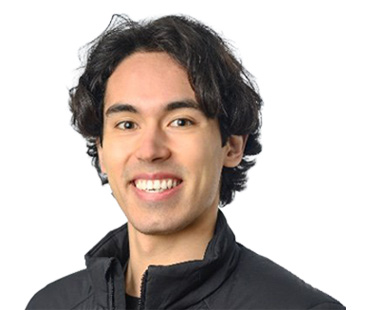
Active in blockchain since 2013, Phil is a computer scientist and world-leading Web3 expert. Prior to founding EasyA, Phil founded two groundbreaking marketplace startups and worked at top New York law firm Sullivan & Cromwell. He was one of the youngest people ever to pass the New York Bar and ranked top of his year as a scholar at Cambridge University. Phil was recently recognised as one of Cambridge’s leading alumni, awarded by former Secretary of State for Culture Lord Smith.
Phil Kwok | CEO & Co-founder
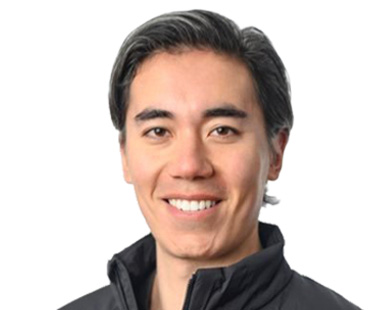
Dom is COO and co-founder of EasyA. A finance whiz, Dom has deep connections in TradFi having previously worked at the world’s top financial institutions such as Blackstone and Goldman Sachs. In addition to this, he has a wealth of experience across the blockchain space, giving him an unparalleled understanding of how markets work. Dom graduated Cum Laude from The Wharton School, University of Pennsylvania as a Joseph Wharton and Benjamin Franklin Scholar.
Dom Kwok | COO & Co-founder
How we can help
Speak to our expert for a confidential discussion about where you currently sit on that journey.
Read the complete Easya interview series
-

Three defining breakthrough moments with the EasyA co-founders: Creating value
8min read
Learn how EasyA’s founders created lasting business value, scaled growth and prepared their company for its next stage as a public business.
-

Three defining breakthrough moments with the EasyA co-founders: Career to legacy
8min read
Learn how EasyA founders Phil and Dom Kwok chose entrepreneurship over traditional careers and what it takes to build an enduring enterprise.